
Why Multilingual GEO Is a Discipline of Its Own
Many organizations working with Generative Engine Optimization (GEO) focus exclusively on their primary language. That is understandable — but it means leaving significant global AI visibility on the table. When a user in Tokyo asks ChatGPT a question in Japanese, or when a decision-maker in Munich searches for information via Perplexity in German, the answer is determined by the authority of entirely different sources than those that dominate English-language queries.
Multilingual GEO is not about machine-translating existing content and hoping for the best. It is about understanding how large language models (LLMs) assess source credibility across different languages, which technical signals help AI connect your language versions, and how cultural context influences what is perceived as an authoritative answer.
How AI Models Handle Multilingual Content
Large language models are trained on data from the internet, and that distribution is far from even. English dominates training data heavily, which generally means English-language content has a built-in advantage when it comes to being cited. But this does not mean other languages are hopeless — it means the strategy must be different.
Language-Specific Authority Building
An AI model responding to a question in Swedish does not necessarily search for the best global source and translate the answer. It tends to prioritize sources that are authoritative in that specific language. This means your Swedish website needs to build its own authority within the Swedish information landscape — with internal link structures, external citations from Swedish publications, and content that answers questions actually asked in Swedish.
The same applies to every market you target. A Spanish version of your website should have inbound links from Spanish and Latin American domains, be cited in Spanish-language media, and contain information relevant to the specific context of Spanish-speaking users.
The Uneven Distribution of Training Data
It is widely recognized among NLP researchers and LLM developers that training data for most major models is heavily weighted toward English. Languages such as French, German, Spanish, and Portuguese have good representation, while many other languages are underrepresented. This has practical implications for GEO:
- For well-represented languages, similar strategies to English apply, but require more effort per unit of visibility.
- For underrepresented languages, a relatively small amount of high-quality content can yield disproportionately large visibility, since competition to become a trusted source is lower.
- Technically precise and fact-based content tends to perform better across all languages compared to generic marketing content.
Hreflang and Its Role in GEO
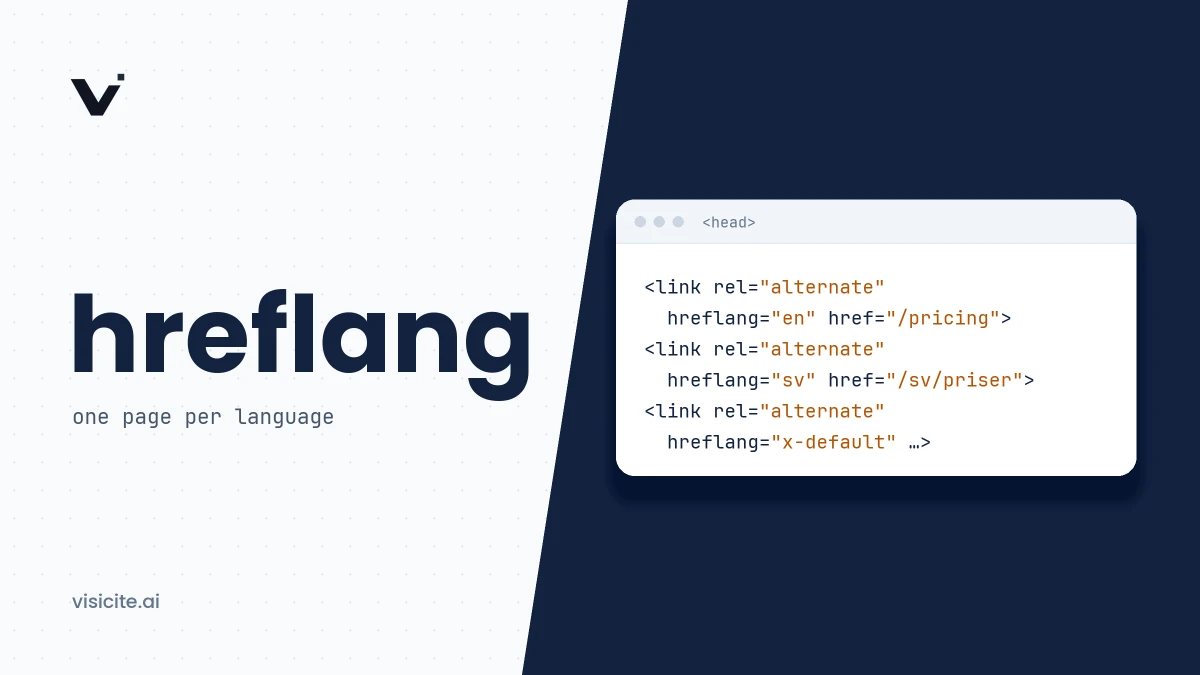
Hreflang is an HTML attribute and XML sitemap signal traditionally used to help search engines like Google understand the relationship between different language versions of a page. In SEO contexts, its primary purpose is to ensure the correct language version is served to the right user.
In GEO contexts, hreflang serves a partially different function. There are no public confirmations that AI crawlers actively use hreflang signals in the same way Googlebot does. However, there are good reasons to implement hreflang correctly as part of a multilingual GEO strategy:
Hreflang as a Content Quality Signal
Correctly implemented hreflang signals that your website is well-structured and professionally maintained. It indicates that you have invested in creating genuinely localized content rather than having a single page attempting to cover all markets. This type of technical quality signal is generally positive for how AI systems perceive your website as a whole.
Practical Implementation of Hreflang
To implement hreflang correctly in a multilingual GEO context, follow these principles:
- Use correct language and region codes: Combine ISO 639-1 language codes with ISO 3166-1 region codes where relevant, for example
sv-SEfor Swedish in Sweden andes-MXfor Spanish in Mexico. - Always include an x-default: The
hreflang="x-default"tag specifies which page should be shown when no other version matches the user's language or region. - Make the implementation reciprocal: Each language version must reference all other versions, including itself. A missing reciprocal reference is a common technical error.
- Choose a consistent implementation method: Either HTTP headers, HTML tags in
<head>, or XML sitemap — but do not mix methods inconsistently.
Content Adaptation Versus Direct Translation
There is a critical difference between translating content and adapting content. For GEO purposes, this distinction is vital, as AI models are generally capable of identifying content that is a direct machine translation compared to content genuinely created for a specific market.
What Genuinely Localized Content Means
Localized content for GEO means more than swapping words for their equivalents in another language. It involves:
- Using locally relevant examples: An article about pricing strategies in Swedish should reference Swedish market conditions, not simply translate American examples.
- Adapting to local regulations and standards: Legal, financial, and regulatory contexts differ between countries. Content that ignores this is perceived as generic and unadapted.
- Using locally established terminology: In many industries, established terms exist in the local language that differ from direct translations of English concepts.
- Addressing locally relevant questions: The questions users ask vary between markets. Keyword research in the local language is essential.
Structured Content Performs Better in Multilingual Contexts
Content that is well-structured with clear headings, definitions, and factual statements tends to perform better for AI citability across all languages. This is partly because structured content is easier for AI models to extract specific information from, regardless of the language it is written in. Invest in creating clear definitions of key concepts in each language, and ensure factual claims are specific and verifiable.
Cultural Differences in AI Search Behavior
One aspect of multilingual GEO that is frequently overlooked is that users in different cultures tend to formulate their questions in fundamentally different ways. This directly affects what content is relevant to optimize for.
Direct Versus Indirect Question Formulation
Research in linguistics and communication patterns generally shows that cultures differ in how directly communication occurs. In some cultures, it is common to ask direct, specific questions. In others, questions are formulated more indirectly or contextually. This affects how you should structure your content to match the questions actually asked in the target language.
For GEO, this means you should analyze how questions are actually formulated by users in each target market, rather than starting from how you would formulate the question yourself and then translating it.
Authority Signals Vary Culturally
What is perceived as an authoritative source varies between cultures and markets. In some markets, academic and scientific associations are highly valued. In others, industry organizations or government institutions are the primary authority sources. Understanding which types of sources are highly valued in your target market helps you position your content in a way that resonates with how AI models trained on that market's data assess authority.
Local Link Profile and Citations
To build authority in a specific language, you need inbound citations from established sources in that language. A website with strong English authority but no citations from German-language sources will generally have lower authority in German AI responses. Actively working to be cited by local media, industry publications, and academic sources in each target market is a central part of multilingual GEO.
Technical Considerations for Multilingual GEO
Beyond hreflang, there are several technical aspects important to multilingual GEO success.
URL Structure for Multilingual Websites
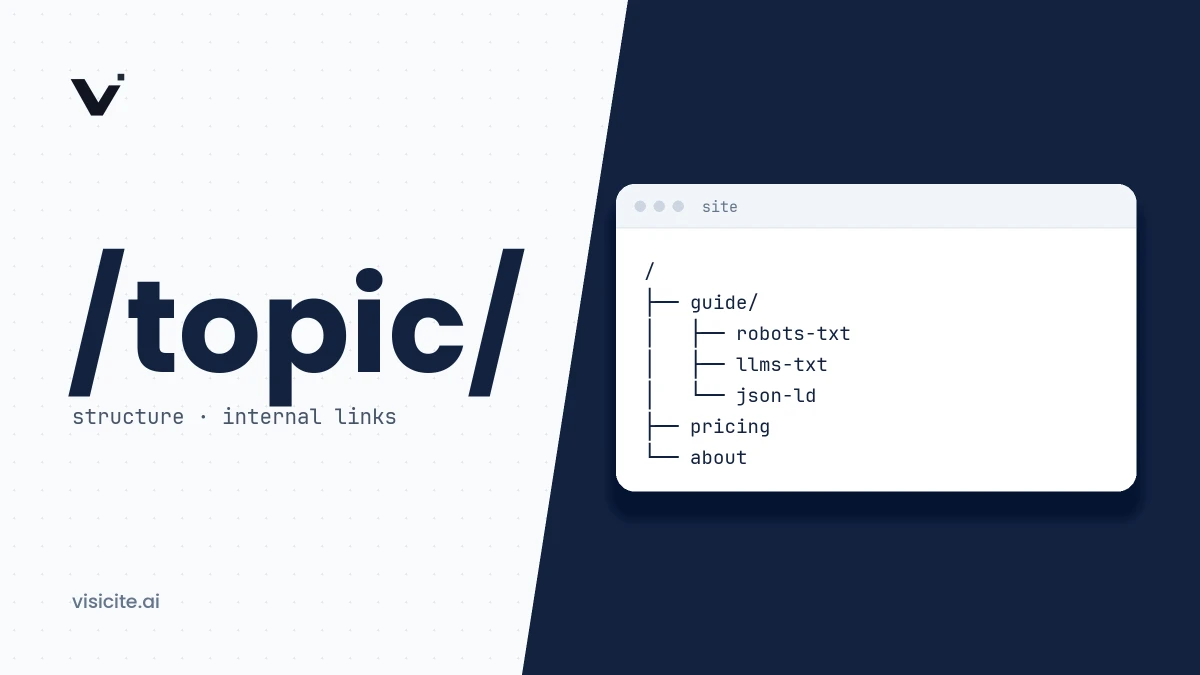
There are three common methods for structuring multilingual websites: separate domains (example.de, example.fr), subdomains (de.example.com), or subdirectories (example.com/de/). From a GEO perspective, there are arguments for all three approaches, but subdirectories are generally preferable for smaller organizations as they consolidate authority on a single domain. Separate domains can be advantageous if you want to build genuinely separate brand presences per market.
Structured Data in the Local Language
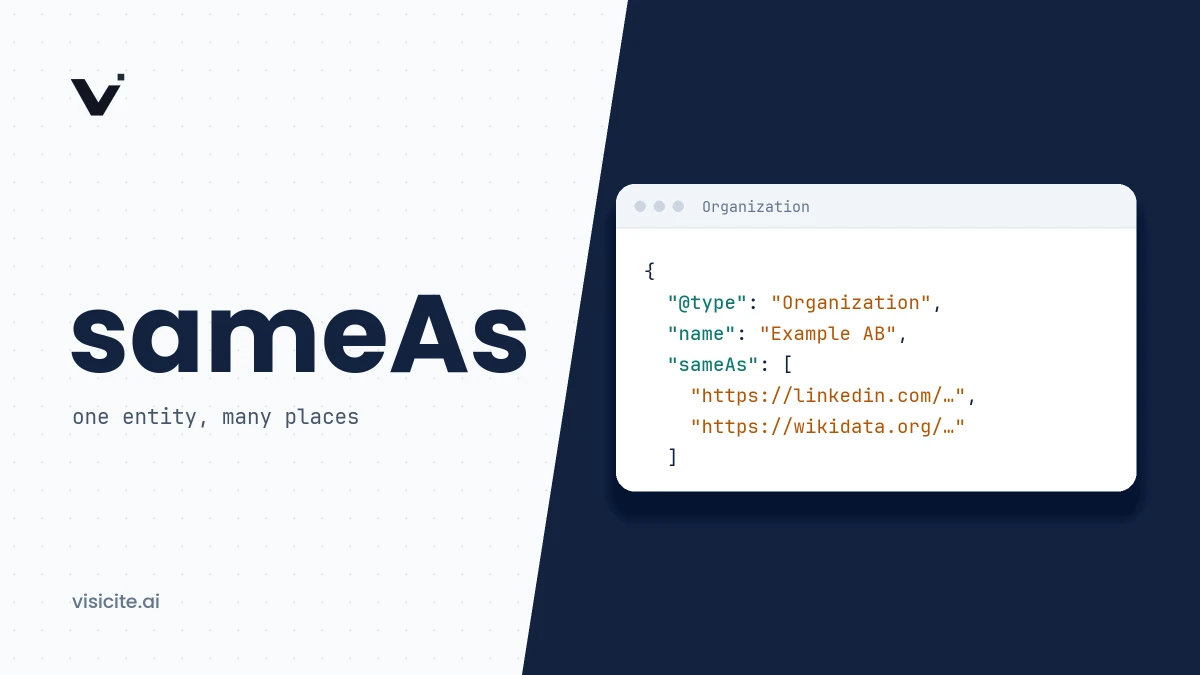
Schema markup and JSON-LD should be implemented in the local language for each version of a page. Properties such as name, description, and keywords in your structured data should be in the page's language, not always in English. This helps AI systems correctly associate the content with the relevant language and market.
Canonical Tags in Combination with Hreflang
A common technical pitfall is the incorrect combination of canonical tags and hreflang. Each language version should have a canonical tag pointing to itself (self-referencing canonical), not to a master version in another language. Setting the canonical on all versions to point to the English version signals to crawlers that the other versions are duplicates — which defeats the entire purpose of multilingual GEO.
A Practical Order of Priority
If you are building a multilingual GEO strategy from the ground up, the following order of priority is recommended:
- Identify your most important target markets based on business potential and the competitive landscape in AI responses in the relevant language.
- Conduct language-specific query research to understand how potential customers actually formulate their questions in each market.
- Create genuinely localized content — not machine-translated — with locally relevant examples, terminology, and context.
- Implement correct technical infrastructure with hreflang, self-referencing canonicals, and structured data in the local language.
- Build local authority by actively working to be cited by established sources in each target market.
- Measure and iterate by regularly testing how your content is cited in AI responses in each target language.
Summary
Multilingual GEO is a complex but necessary discipline for organizations that want to appear in AI-generated responses globally. Translating existing content is not sufficient — you need to understand how AI models assess authority in each specific language, adapt content to local cultural and contextual conditions, implement correct technical infrastructure, and actively build authority in each target market. Organizations that do this work carefully will have a significant advantage as AI-driven search continues to grow globally.